
Book Launch: “Nabava kao ogledalo upravljanja”

The book Nabava kao ogledalo upravljanja (Procurement as a Mirror of Management), authored by Helena Popović Petrušić, was officially presented at Novinarski dom, gathering a large number of professionals from business and academia.
The event attracted significant interest, reflecting the growing relevance of procurement as a driver of value creation and organisational resilience.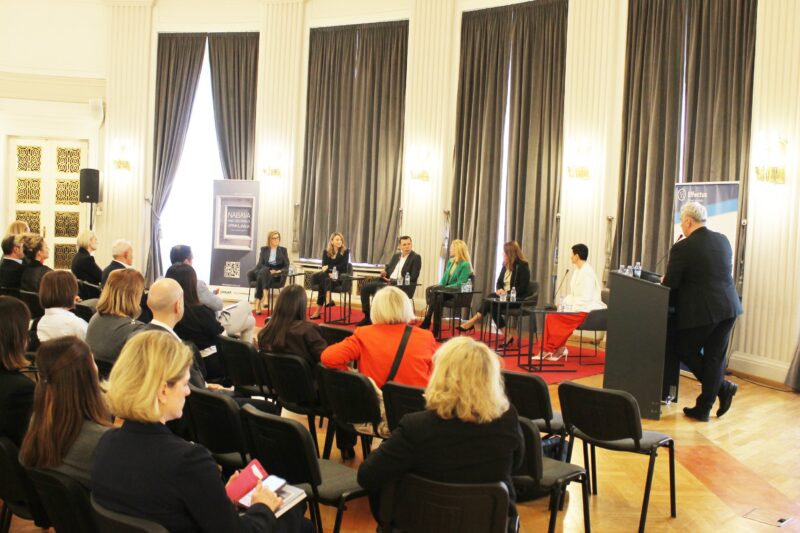
The opening remarks were delivered by the reviewer, Prof. Dr. Đuro Horvat from Veleučilište Effectus, who emphasised the book’s contribution in positioning procurement not merely as a functional activity, but as a key management mechanism shaping value across the organisation.
The discussion continued through a panel that brought together experienced professionals, addressing a set of critical questions related to the role of procurement in decision-making and value creation.
The panel explored the current position of procurement in organisations, questioning whether it is still perceived as an operational function or increasingly recognised as a contributor to business value. It also addressed the readiness of procurement professionals to take on greater responsibility in shaping decisions that extend beyond cost.
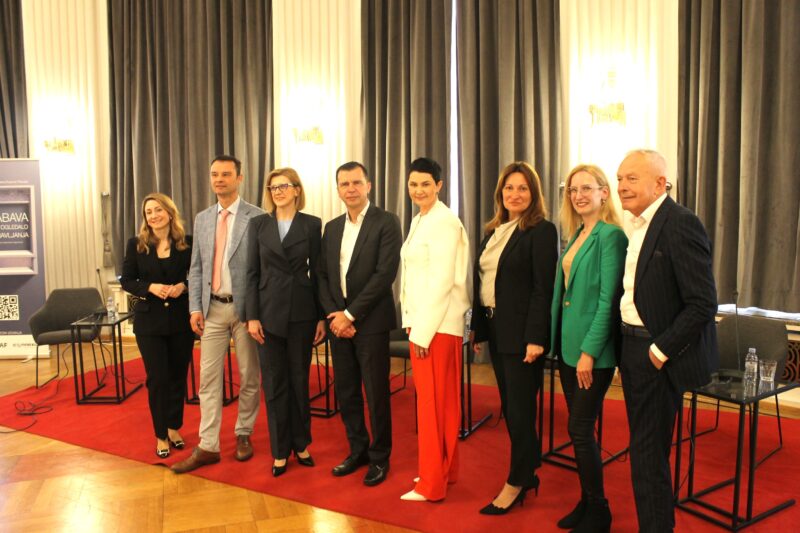
A significant part of the discussion focused on the consequences of decisions. Panelists shared practical examples where optimising one objective led to unintended effects in another, highlighting the inherent tension between cost, risk, and sustainability.
The conversation further examined whether organisations today have the frameworks needed to manage such trade-offs, and what role management must play in defining priorities and decision boundaries.
Finally, the panel addressed the question of implementation — what changes in everyday procurement practice when decision-making is structured, and whether procurement has the potential to develop into a source of leadership within organisations.
The book introduces a structured perspective on value creation, highlighting that value does not emerge from isolated metrics, but from decisions and their impact across multiple dimensions, including capital, cost, risk, innovation, and sustainability.
The event concluded with an engaging discussion with the audience, further confirming the importance and timeliness of the topic.
Acknowledgements
The successful organisation of this event would not have been possible without the support of partners and sponsors.
We extend our sincere thanks to Janaf d.d. and Connexus inženjering for their support and contribution to the realisation of this event.
We also thank all panelists, participants, and guests for their engagement and for contributing to a meaningful and thought-provoking discussion.
